 Zarai OS
Theka on each crop
The theka divided by the crops it covers, shown in each crop's costs as "Theka (land rent)".
On theka land the rent is part of every crop's cost. On batai the landlord takes a share of the harvest and sales. ZaraiOS records each field the way you hold it, puts the theka on the crops it covers, takes the landlord's share out of the crop report, and keeps what you still owe the landlord.
How it works
How the land is held is set on the field, not on each crop. ZaraiOS then does the sums for every crop grown on it.
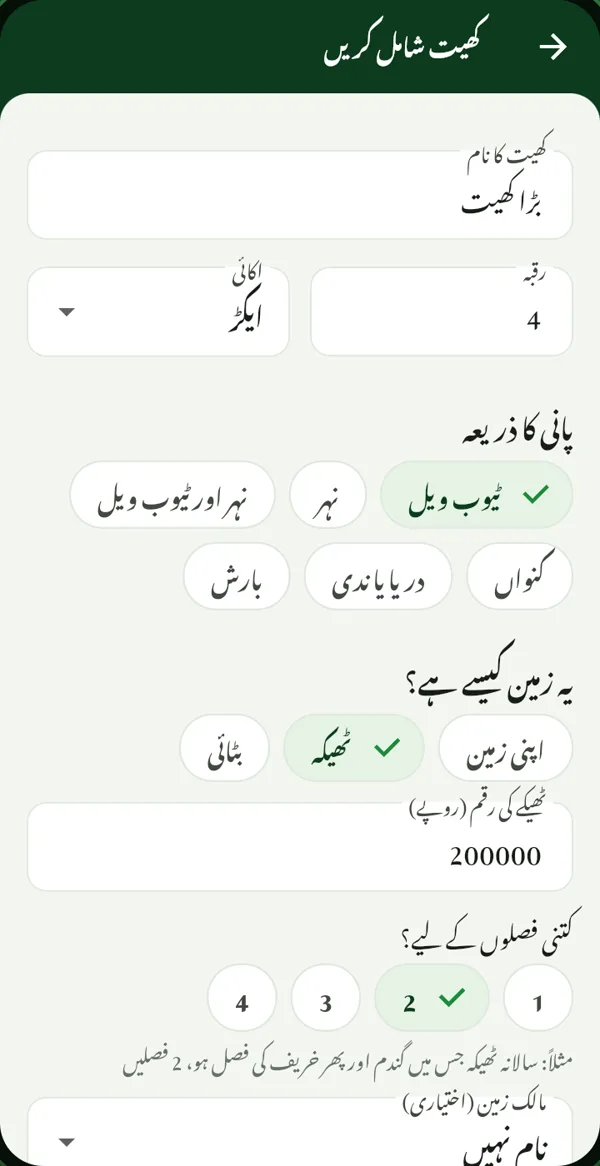
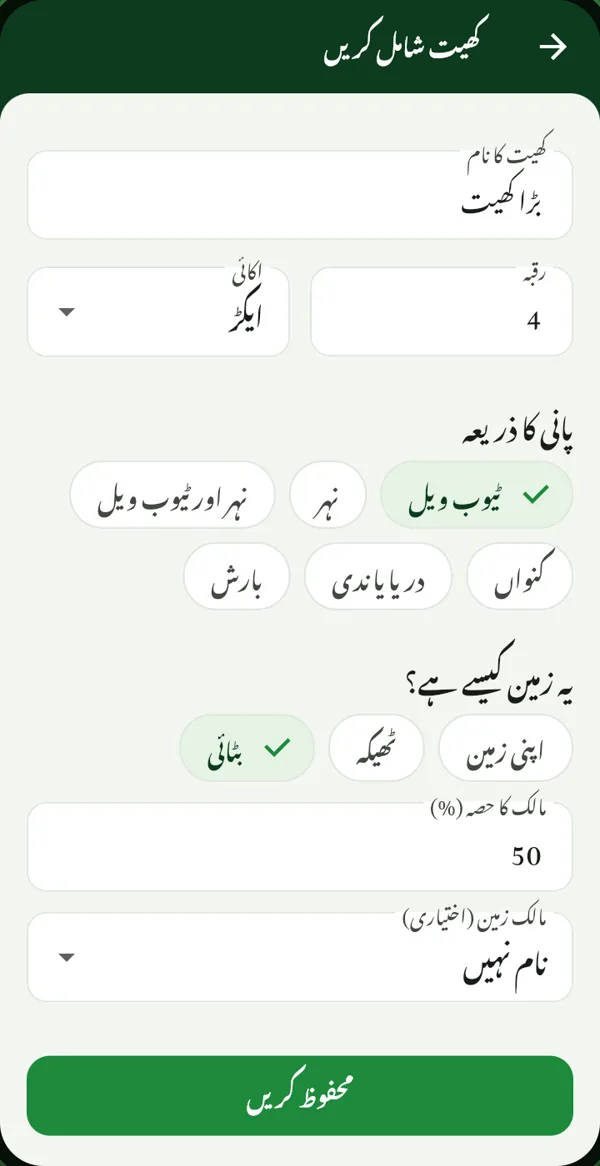
When you add or edit a field, choose "Own land", "Theka (rent)" or "Crop share" (batai) under "How is this land held?".
Enter the theka amount and how many crops it covers, 1 to 4. A yearly theka for wheat and then a kharif crop covers 2, so each crop carries half as "Theka (land rent)".
Enter the landlord's share in percent. The crop report shows the landlord's share of the harvest and of sales, and your profit after it.
If the landlord shares a cost, such as fertiliser, write the landlord's part under "More details" on that cost. Only your part counts as your cost.
What it keeps
Each figure comes from what you enter. ZaraiOS does the adding up, crop by crop.
The theka divided by the crops it covers, shown in each crop's costs as "Theka (land rent)".
Name the landlord and the date the theka is due from. From that date it shows as owed, and you pay it with "Pay", in parts if you like.
The landlord's percent of the harvest and of sales, shown separately in the crop report.
The landlord's part of a cost is written on that cost; only your part counts against your profit.
The crop report shows cost per acre, cost per maund and the break-even price, with the theka included.
Sales minus the landlord's share minus your costs, for each crop, and shareable as a PDF.
One field on a yearly theka, and one field on batai. Amounts are examples only.
| What | Amount | In the report |
|---|---|---|
| Yearly theka on a field, covering 2 crops | Rs 200,000 | Rs 100,000 on each crop |
| Wheat from a batai field sold | Rs 400,000 | Landlord's 50%: Rs 200,000 |
| Your own costs on that batai wheat | Rs 120,000 | Your profit: Rs 80,000 |
Example amounts only, not theka rates or advice. Each farmer enters the theka and share they agreed.
Theka owed to the landlord sits in your khata with dealers and arhtis. See how the kisan khata works
Every other crop cost is recorded the same way. See how farm expense tracking works
Add or edit the field, choose "Theka (rent)" under "How is this land held?", and enter the theka amount and how many crops it covers.
Choose 2 crops. Each crop on that field carries half the theka as a cost. You choose the number; the app never assumes it.
Choose "Crop share" and enter the landlord's share in percent. The crop report shows the landlord's share of the harvest and sales, and your profit after it.
Write the full cost, and put the landlord's part under "More details". Only your part counts as your cost.
Yes. Name the landlord and the date the theka is due from. It then shows as owed, and you can pay it in parts with "Pay".
It does not set rates. Where at least 10 farms in your district have recorded it, More → "In your district" shows the middle theka per acre from their records.
ZaraiOS does not give religious rulings; please ask a scholar you trust. The app only keeps the record of what you agreed.
Yes. You can record without signal. Internet is needed at times to create your account and sync records to your other phone.
Early access
ZaraiOS is accepting applications from Pakistani farmers for its Android early-access test.