 Zarai OS
Dealers and shops
Fertiliser, seed, spray and other inputs bought on udhaar, each payment, and the extra paid for credit when you give the cash price.
Fertiliser on credit from the dealer, an advance from the arhti, a loan from the bank, wheat sold to a buyer who pays later. ZaraiOS keeps a separate khata for each person, shows what you owe and what is owed to you, and keeps every purchase and payment with its date.
How it works
You record what happened, when it happened. ZaraiOS does the adding up, so the khata is right even months later.
On any cost, such as fertiliser, seed or spray, choose "On credit (udhaar)" and pick the dealer, arhti or shop. You can add the cash price, to see the extra paid for credit, and the date you will pay by.
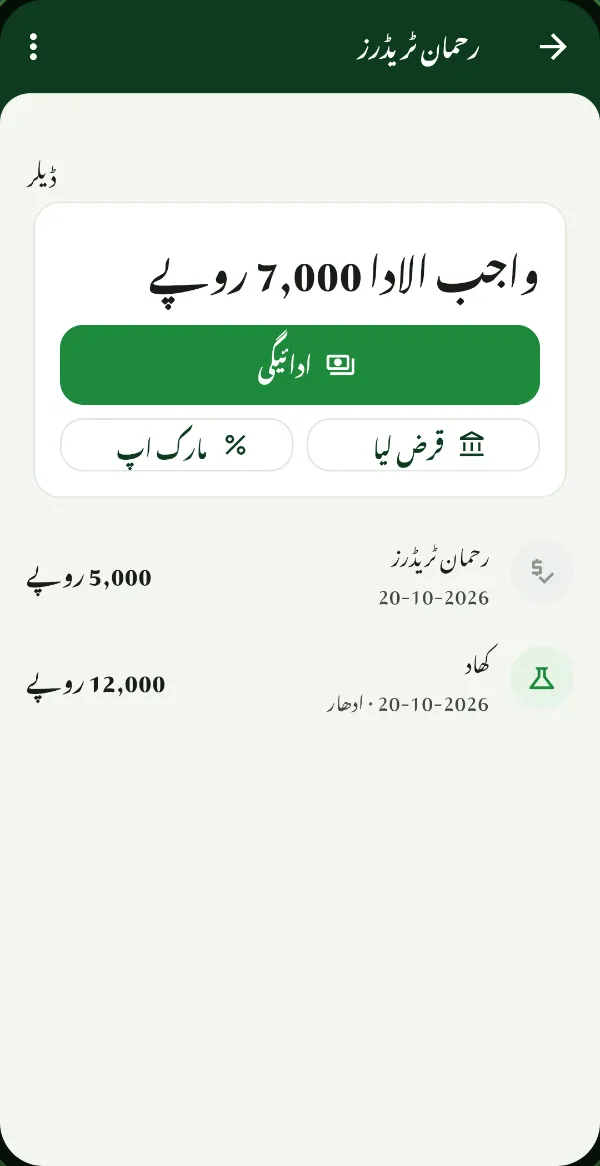
On the dealer's page, tap Pay. The app suggests what is owed; you can pay less, in cash or in crop. Paying more than owed shows as an advance.
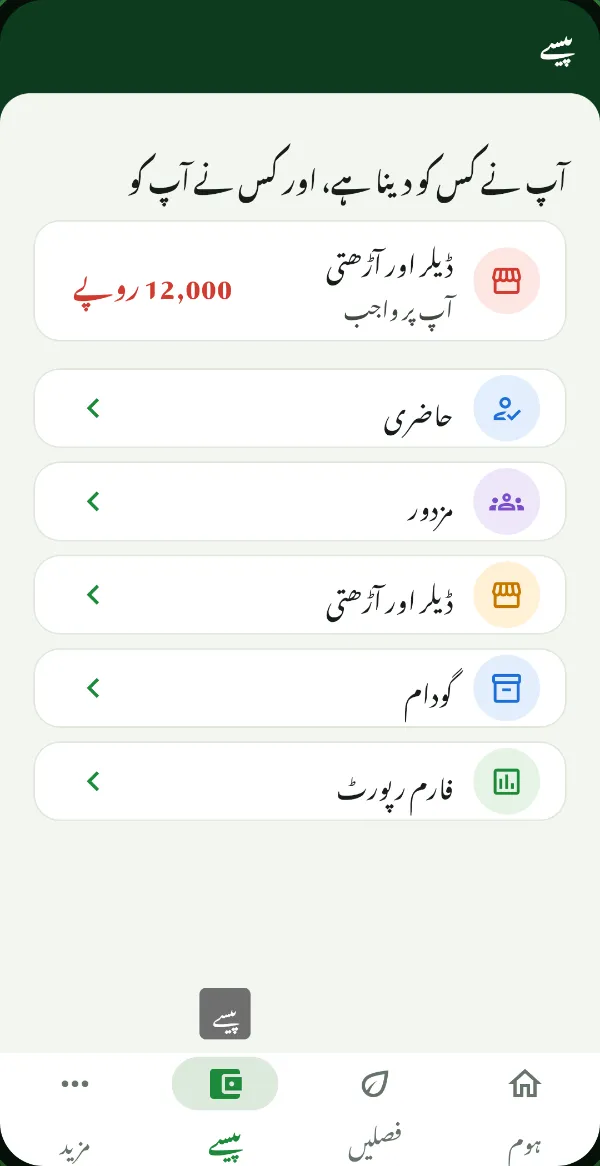
The Money tab shows the total owed to dealers and arhtis, to each one, and the money buyers still owe you.
A pay-by date on credit or a loan becomes a phone reminder while money is still owed. Overdue dates are marked.
Who it covers
Each person gets their own page with what is owed, every entry and its date, so nothing depends on memory.
Fertiliser, seed, spray and other inputs bought on udhaar, each payment, and the extra paid for credit when you give the cash price.
Credit or advances from the arhti. When you sell through an arhti you owe, "keeps what I owe" records the payment from the sale.
Choose "Buyer pays later" on a sale. The buyer owes the money you get after commission and other deductions; tap Received when it is paid.
On a field held on theka, the theka is owed to the landlord from the date you set, and paid with Pay like a dealer.
Cash borrowed, with an optional pay-back date. A loan is not counted as a cost or income. Markup or interest that you enter is counted as a farm cost.
What each labourer is owed from attendance and wages, and every payment made to them.
A notebook khata only shows what someone remembered to write. ZaraiOS keeps the balance after every entry. Example of one dealer's khata:
| What happened | Amount | Still owed |
|---|---|---|
| DAP bought on credit from the dealer | Rs 12,000 | Rs 12,000 |
| Part payment to the dealer | Rs 5,000 | Rs 7,000 |
| Wheat sold through the arhti; he keeps what is owed | Rs 7,000 | Rs 0 |
Example amounts only. A purchase on credit counts as a crop cost on the day it is bought, so the crop report is right before you pay; the payment is not counted as a cost again.
Credit purchases are also part of each crop's cost. See how farm expense tracking works
Land on theka or batai has its own hisab too. See theka and batai accounts
Yes. Each dealer, arhti, shop, buyer, landlord or lender has their own page with what is owed, every purchase and payment, and its date.
Yes. Pay suggests the full amount owed, but you can enter any amount. The rest stays owed. You can also pay in crop instead of cash.
Choose the arhti on the sale form and tick that they keep what you owe. The payment to the arhti is recorded from the sale, and the full sale still counts in your sales.
Yes. Choose "Buyer pays later" on the sale. The Money tab shows what each buyer owes you, and Received records the money when it comes.
No. You enter the markup or interest amount. ZaraiOS records it as a farm cost and adds it to what is owed; it does not apply rates.
Yes, if you give a pay-by date on credit or a pay-back date on a loan. The reminder comes as a phone notification while money is still owed.
A shop khata app keeps customers and sales. ZaraiOS is made for a farm: udhar is linked to the crop it was spent on, an arhti can keep what you owe from a sale, and the crop report shows your real profit.
No. ZaraiOS only keeps your records. It is not a bank or lender.
Yes. You can record without signal. Internet is needed at times to create your account and sync records to your other phone.
Early access
ZaraiOS is accepting applications from Pakistani farmers for its Android early-access test.