 Zarai OS
Daily dihari (Rozana dihari)
Log daily workers with per-day rates, full days or half days (aadha din). Perfect for sowing, weeding (godi) and irrigation turns.
Keeping track of multiple workers, daily dihari rates, half-days, and seasonal advances (peshgi) is hard in a paper notebook. ZaraiOS gives Pakistani farmers a clean offline labour attendance register: mark daily attendance, log payments, and know exactly what you owe each worker.
How it works
Whether you hire five daily workers for weeding or have a permanent tube-well operator, ZaraiOS keeps attendance and wage balances straight.
Record attendance by simple worker count (e.g. 6 labourers at Rs 1,200) or add worker names to maintain individual ledgers.
Choose full day, half day, or multiple days. Set the daily dihari rate once; the app remembers your last rate.
When giving money before work or paying at the weekend, tap Pay. Advances show clearly without duplicating crop costs.
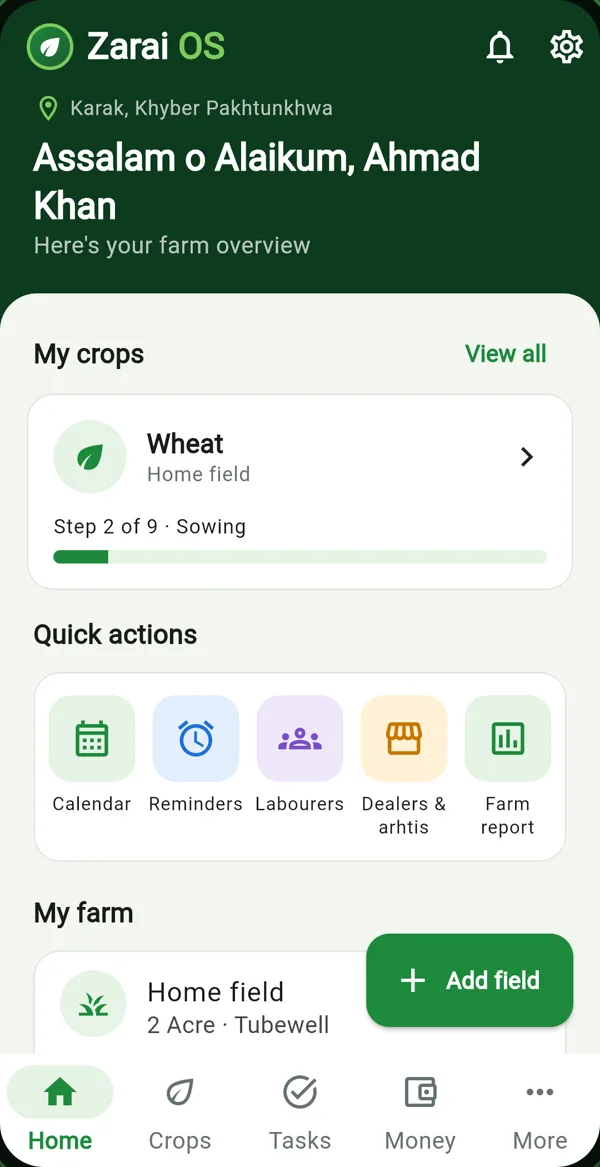
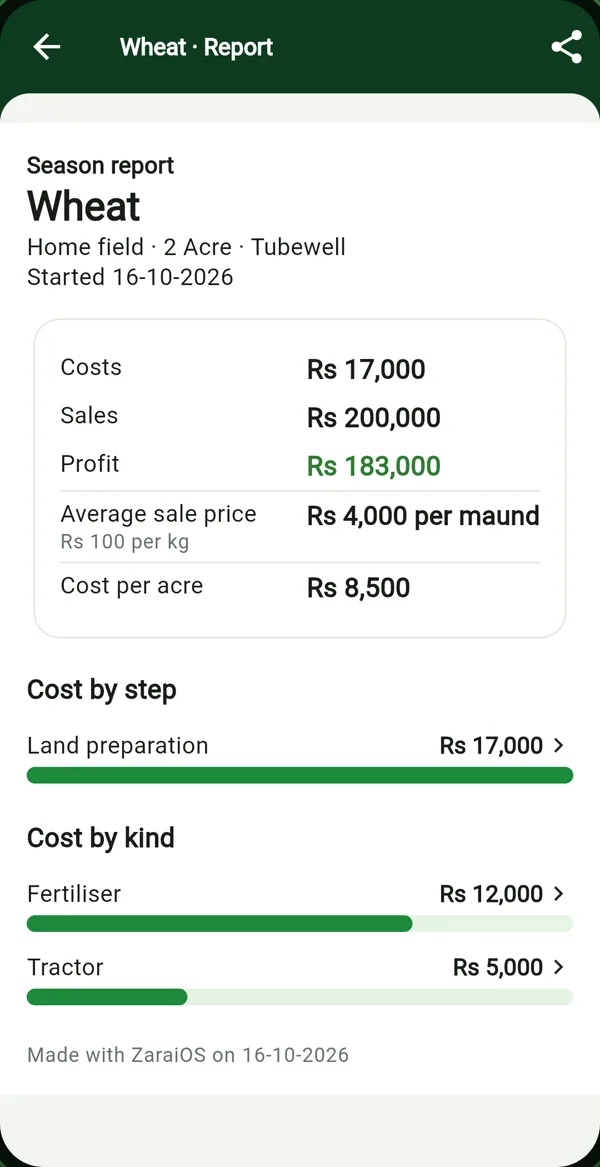
See total wages owed across all labourers and exact labour expense per crop, per stage, and per acre in your report.
Labour features
Built specifically for the way farming labour works in Pakistan.
Log daily workers with per-day rates, full days or half days (aadha din). Perfect for sowing, weeding (godi) and irrigation turns.
Track money paid in advance. ZaraiOS credits the worker ledger so you never double-count advances as new crop expenses.
Fixed-amount contract jobs for onion transplanting (paneri), cotton picking (chunayee), or wheat harvesting per acre or per kanal.
Set monthly salaries for permanent farm hands or tube-well drivers. Record monthly wages with one tap and assign to crops.
Give regular workers their own account (khata): see days worked this season, payments made, and current balance owed.
Labour expenses automatically feed your crop reports, showing total labour days and exact labour cost per acre.
How daily attendance and partial payments build a clear worker ledger. (Example figures only).
| Worker / Task | Attendance & rate | Advances & balance owed |
|---|---|---|
| Gul Khan (Daily dihari) | 8 full days @ Rs 1,400 = Rs 11,200 | Paid Rs 8,000 · Owed Rs 3,200 |
| Akbar Ali (Daily dihari) | 6 full days, 2 half days @ Rs 1,200 = Rs 8,400 | Paid Rs 8,400 · Cleared (Rs 0) |
| Bibi Zainab & team (Contract theka) | 4 kanals onion transplanting = Rs 16,000 | Peshgi Rs 6,000 · Owed Rs 10,000 |
| Sher Ali (Monthly tubewell) | Monthly salary = Rs 18,000 / month | Advance Rs 5,000 · Balance Rs 13,000 |
| Harvest gang (Group count) | 12 workers × 1 day @ Rs 1,500 = Rs 18,000 | Paid same day in cash · Rs 0 |
Total labour cost: Rs 71,600. Total balance owed: Rs 26,200. Figures are examples only: ZaraiOS never assumes wage rates.
Keep dealer credit, fertilizer loans and market hisab kitab in order too. See how the kisan khata works
Calculate total seasonal expenses and break-even cost per acre. See cost per acre calculator
Yes. You can record daily attendance with a quick worker count, or tick names from your saved worker list for full or half days.
When logging daily dihari, simply tap Half day. The app automatically calculates half of that worker’s daily wage rate.
When you give an advance, it is recorded in the worker’s ledger. The actual crop cost is recorded on the day work occurs, so advances never duplicate your expenses.
Yes. Choose "Contract" instead of "Per day", and enter either a lump-sum amount or a rate per kanal or acre.
Yes. Set a monthly salary on the worker’s profile. Each month, one tap logs the wage and assigns it to a crop or shared farm cost.
Yes. All attendance marking, wage logging, and ledger updates work completely offline on Android without cellular signal.
Yes. You can review individual worker summaries with all work dates and payments directly on your phone.
No. Wage rates vary across districts and seasons. The app remembers your last entered rate for convenience, but never dictates rates.
Early access
ZaraiOS is accepting applications from Pakistani farmers for its Android early-access test.